BYD has grown quickly, both in China and overseas. In 2024, it sold around 4.27 million new-energy passenger cars, with roughly 60 percent of them being DM-i hybrid models.
But this success isn’t just about numbers. DM-i has redefined what a plug-in hybrid can be. It gives the motor the leading role for everyday driving, while the engine steps in quietly to generate power or keep the system efficient at higher speeds. For most commuters and families, that means a smooth, EV-like experience in the city and a long, confident range for road trips.
The fifth-generation DM-i, launched in 2024, takes this concept even further. It can achieve as little as 2.6 L/100 km (about 90 mpg US) when the battery is low, and offers up to 2,100 km of combined range on a full charge and tank. It’s a clear example of how far modern hybrids have advanced in both efficiency and practicality.
So what exactly is DM-i? And why are so many drivers choosing it? Before we dive in, it helps to see where BYD stands in the bigger picture, as one of the leading Chinese EV brands and a major force among global EV brands. In the next sections, we’ll take a closer look at how it works and what makes it matter on the road.
What is DM-i
To understand DM-i, it helps to start with the basics of a plug-in hybrid, or PHEV.
What is a PHEV
A PHEV pairs a traction battery and an electric motor with a gasoline engine. You can plug it in, charge it overnight, and drive purely on electricity for your daily errands. When the battery runs low, the engine steps in to keep you moving, so you never have to worry about finding a charger.
For many drivers, that mix of electric driving and backup power makes a PHEV a practical bridge toward full electrification.
DM-i: A Special Kind of PHEV
Now that the basics are clear, let’s take a look at how BYD reshaped the idea of a plug-in hybrid with DM-i. DM-i stands for Dual Mode Intelligent, BYD’s signature hybrid system.
Its biggest difference is simple. DM-i puts electricity first. The electric motor handles most of the driving, while the engine mainly works as a generator or supports high-speed cruising when needed. Unlike an extended-range EV (EREV), the engine in DM-i can also connect directly to the wheels for maximum efficiency at highway speeds.
DM-i became popular because it finds the right balance between efficiency, range, and cost. It fits what most people actually need from a car.
In most PHEVs, the engine still takes the lead and the motor only assists. DM-i reverses that relationship, giving the electric motor priority and keeping the engine secondary. This change makes daily driving smoother, quieter, and far more efficient.
This “electric-first, fuel-as-backup” setup makes DM-i feel like an EV in the city, quiet, smooth, and easy on fuel. On long trips, its efficient engine keeps the range comfortably in the four-figure zone.
That’s why many drivers see DM-i as one of the most refined and well-balanced hybrid systems on the market today.
The DM Hybrid Family
BYD’s hybrid lineup also includes two related systems: DM-p (Dual Mode Performance) and DM-o (Dual Mode Off-road). Together, they form the DM family—three hybrid solutions designed for different driving needs.
DM-i focuses on efficiency and comfort, making it ideal for everyday family use.
DM-p delivers stronger acceleration and sportier handling for premium models.
DM-o is engineered for all-terrain power and off-road performance.
If DM-i is built around the “electric-first” idea, how does it actually behave on the road?
How DM-i Works
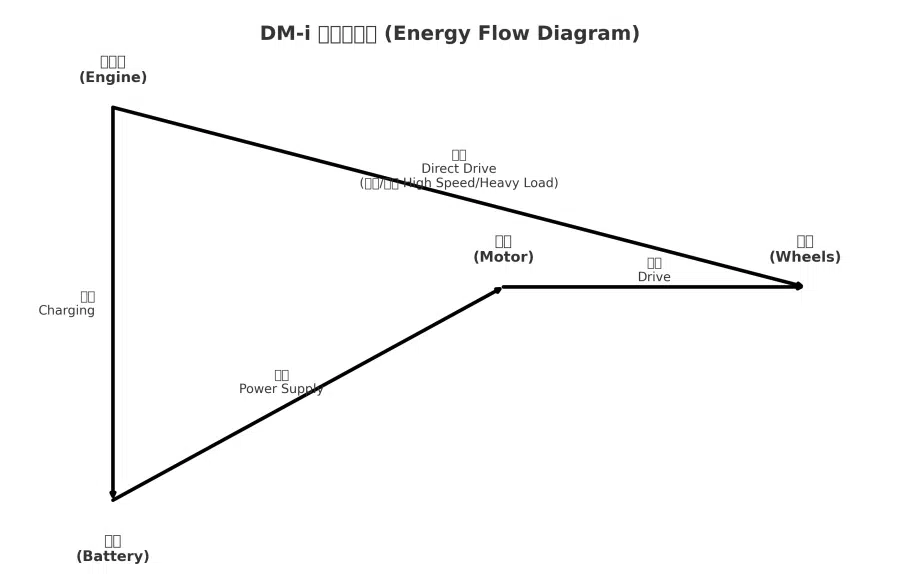
BYD’s DM-i system is designed to make hybrid driving smooth and efficient. Instead of using fixed drive modes, it automatically adjusts among four power strategies to balance performance and energy use. Each mode is selected in real time based on driving speed, power demand, and battery level.
The system relies mainly on electric power in the city, combines both sources when accelerating, and lets the engine take over at higher speeds.
Energy flow of BYD’s DM-i hybrid system. “Motor” here represents the integrated EHS electric-hybrid unit, which combines both drive and generator motors within one system.
The table below outlines how the system works across different driving conditions.
Driving Scenario
Electric Motor
Engine
Explanation
Start / Low Speed (0–50 km/h)
Drives wheels (primary)
Not engaged
Pure electric drive, smooth, quiet, and fuel-saving at launch.
Mid-Speed Cruising (50–80 km/h)
Drives wheels (primary)
Generates power (supportive)
The motor leads propulsion while the engine generates electricity when needed.
High-Speed Cruising (above 80 km/h)
Assists or maintains efficiency
Directly drives wheels (primary)
The engine connects to the wheels via a fixed ratio, with motor assistance as required.
Acceleration / Overtaking / Uphill
Drives wheels (with engine support)
Generates power and assists driving
The engine and motor combine for higher output and quicker response.
When Battery Is Low
Drives wheels (with reduced output)
Mainly generates power, may drive wheels directly
The engine covers both generation and propulsion to sustain range and performance.
The logic behind it can be summed up simply:
City Driving – Pure EV Mode
During city driving, the system operates in what BYD calls the Pure EV Mode. The electric motor alone powers the car while the engine stays off, delivering instant, quiet, and linear acceleration. In stop-and-go traffic, it feels almost identical to a battery electric vehicle, offering a drive that is smooth, refined, and effortlessly quiet.
Moderate Speeds – Series Hybrid Mode
When the speed rises to around 50–80 km/h, DM-i switches into the Series Hybrid Mode. Here, the engine runs only to generate electricity, sending power to the motor rather than directly driving the wheels. The result is continuous and seamless electric propulsion, with almost no vibration or gear changes. Even when the battery charge drops, the driving experience remains calm and consistent.
Highway Driving – Engine Direct Drive Mode
At highway speeds above 80 km/h, the system enters the Engine Direct Drive Mode, where the engine connects directly to the wheels through a fixed gear ratio. This setup maximizes fuel efficiency while allowing the electric motor to assist or recover energy when needed. The response is crisp and immediate, and acceleration stays smooth without any lag or shift shock.
Performance Mode – Parallel Hybrid Drive
For overtaking, steep climbs, or quick acceleration, DM-i engages the Parallel Hybrid Mode. In this mode, the engine and motor work together to deliver full system power. Instant electric torque combines with steady engine output, giving the car confident, responsive acceleration even under load.
Fuel Efficiency and Everyday Use
What’s remarkable is that this refined, electric-like experience doesn’t come at the cost of fuel economy. In daily commuting, if charged regularly, fuel consumption can be as low as 3 L/100 km. Even without charging, the hybrid system automatically manages energy between the engine and motor, keeping combined fuel use around 4–5 L/100 km, much lower than the 7–10 L/100 km typical of gasoline cars.
Whether it’s running fully on charge or in hybrid mode, DM-i maintains its refined character. It is smooth, responsive, and quietly efficient. In the city, it feels like a pure EV; on the highway, it delivers the long-range fuel efficiency of a hybrid, staying true to BYD’s electric-first philosophy.
This seamless switching allows DM-i to drive as smoothly as an EV while remaining as dependable as a conventional car in everyday use.
Three core components of BYD DM-i
In theory, hybrid logic is simple. What makes the “electric-first” concept work in practice are three key components: the battery, the engine, and the hybrid drive system.
1) Hybrid-tuned Blade Battery
DM-i uses a version of BYD’s Blade Battery optimized for hybrid applications with high-power cells. It maintains the Blade’s well-known safety and thermal stability while improving charge and discharge performance.
For example, the 2025 BYD Tang DM-i offers more than 115 km of pure-electric range, allowing most owners to charge only once a week for daily commuting.
2) Fifth-generation 1.5Ti hybrid-dedicated engine
This engine was designed specifically for hybrid use. It achieves 45.3% thermal efficiency, one of the highest among PHEV engines and about 2.3% than the previous generation.
That means more of each drop of fuel is converted into useful power, improving efficiency right from the source.
3) EHS200 Electric Hybrid System (Dual Motors)
The EHS200 acts as the system’s control center, integrating both a drive motor and a generator motor.
Drive motor: up to 145 kW (≈194 hp) and 325 N·m (≈240 lb-ft) with 97.7% peak efficiency. Its instant torque response makes acceleration and overtaking about 0.5–1.0 seconds quicker than a typical gasoline car, giving confident step-off and smooth passing power.
Generator motor: up to 70 kW, efficiently converting engine power into electricity to recharge the battery and support the drive motor when charge is low.
Overall system transmission efficiency reaches 98.5%, with response roughly 30% quicker than the previous generation. The result is a driving feel that comes remarkably close to a pure EV.
Compared with Toyota’s THS and Honda’s i-MMD systems, BYD’s DM-i follows the same motor-centric foundation but goes further. It pairs a higher-efficiency hybrid-dedicated engine with a larger-capacity battery, resulting in better fuel economy and extended pure-electric range.
BYD DM-i Models
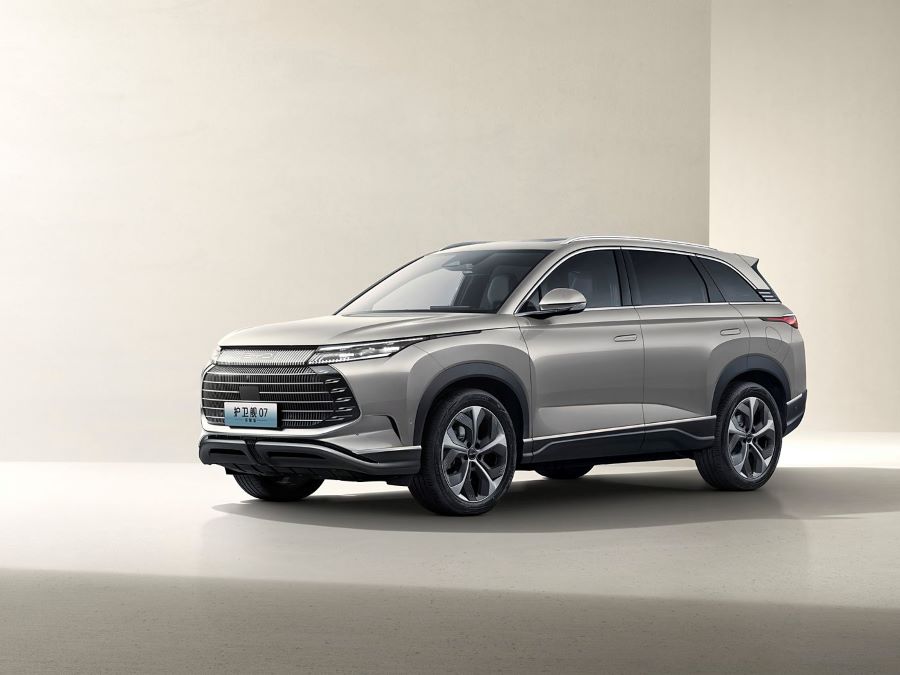
Unlike many brands that offer hybrid technology on only a few models, BYD has applied its DM-i plug-in hybrid system across almost its entire lineup, covering everything from everyday family sedans to flagship MPVs.
This wide adoption shows how mature and adaptable the system has become. Backed by BYD’s strong manufacturing base, the DM-i platform now powers sedans, SUVs, and MPVs, proving that the same hybrid architecture can scale effectively across different vehicle types.
The market response speaks for itself. BYD has led global new-energy vehicle (NEV) sales for three consecutive years, a clear sign that its hybrid strategy resonates with drivers worldwide.
Note
Model names may vary by market. EV-only models and DM-p performance editions are not included.
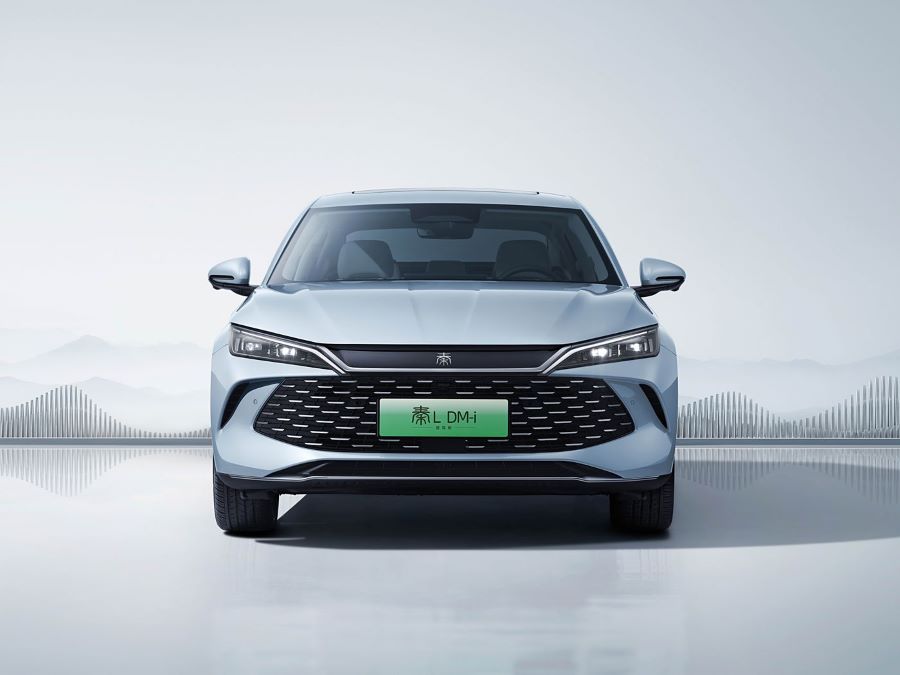
New or fully redesigned models launched after mid-2024, such as Qin L, Seal 06, Sealion series, and BYD Xia, are equipped with the fifth-generation DM-i system.
At its core, DM-i remains a hybrid. What makes it different is how clearly it puts electric drive at the center. BYD uses a larger battery, a motor-first layout, and an engine built for efficiency to rebalance fuel economy and driving pleasure in a segment that’s already mature.
The world isn’t fully electric yet, but DM-i offers a practical way forward. It doesn’t replace EVs. Instead, it makes electric-style driving more accessible to everyday users.
Whether you view it as a bridge to a fully electric future or a long-term hybrid solution, DM-i represents one simple truth: real progress in technology matters only when it solves real problems for real people.
BYD DM-i FAQs: Charging, Driving, and Maintenance
Q1. How does DM-i differ from Toyota’s THS or Honda’s i-MMD?
Toyota and Honda mainly use non-plug-in hybrid systems (HEVs) where the engine still plays the leading role.
DM-i, on the other hand, is a plug-in hybrid (PHEV) that can both charge and refuel. BYD strengthens the electric side, making the “electric-first” logic practical for everyday driving. In city use, it feels much closer to a pure EV.
Q2. Which BYD hybrid system should I choose: DM-i, DM-p, or DM-o?
It depends on your driving habits. DM-i is the best choice for daily commuting and family travel, focusing on smoothness and fuel efficiency. DM-p suits drivers who value performance and stronger acceleration, often found in BYD’s premium or sporty models. DM-o is aimed at off-road enthusiasts, offering all-terrain power and control in models such as Fangchengbao.
Together, they give BYD one of the most complete hybrid lineups on the market.
Q3. How often do I need to charge a DM-i?
Not necessarily every day. Many owners charge at home once or twice a week to cover weekday commutes, then rely on fuel for longer weekend trips.
Even when the battery is low, DM-i remains efficient because the engine generates electricity at its optimal operating point.
Q4. What highway fuel economy can I expect?
At steady highway speeds, where engine direct drive is active, DM-i operates at its most efficient point.
Real-world results vary by model, driving load, and climate, but most users report noticeably lower fuel consumption compared with traditional hybrids.
Q5. How does DM-i perform in cold weather?
In cold conditions, the engine assists more frequently for cabin heating and battery temperature management.
To maintain the best performance, it’s recommended to charge more often and preheat the cabin before departure whenever possible.
Q6. How does maintenance compare with a regular gasoline car?
Brake wear is usually lower thanks to regenerative braking.
Engine oil changes follow hybrid-specific service intervals, and both the hybrid system and battery are covered under BYD’s dedicated warranty program.
Q7. Why is DM-i considered a “realistic” path to electrification?
It balances range, fuel efficiency, charging flexibility, and cost. You don’t need to rely on a dense charging network, yet you still enjoy a smooth, electric driving experience.
That’s why DM-i has become especially popular in regions where charging infrastructure is still developing.
Brian Peng is an automotive sales professional working with SinoAutoGo, focusing on Chinese vehicles for export markets.
He shares practical articles on Chinese EVs, hybrids, and EREV models, based on daily work with vehicle products, specifications, and overseas buyer inquiries. His writing aims to help international distributors and buyers better understand Chinese car brands, powertrain technologies, and model differences from a real-world sales perspective.